
How to Finally Build Good Habits: 8 Evidence-Based Tips
Eat fewer sweets, floss daily, drink fennel tea instead of alcohol, and exercise three times a week. How many times have you started the new year with good intentions, only to quickly fall back into old habits? How is fennel tea supposed to work when it's perfect red wine weather in early January? Why on earth should you start jogging in the snow and frost? And who feels like going to the gym when it's so packed after New Year's Eve?
Although almost everyone rushes into the new year with good intentions, only twelve percent of people manage to stick to them. 88 percent fail. [1] [1] Almost everyone fails to achieve their goals: Anthony Robbins (2012): Change, Robbins Research International But why is that? What is the difference between realised and failed dreams, between fulfilled and dissatisfied people, and between those who achieve something and those who are done for?
The answer lies ... drumroll please …in good – or rather, not-so-good – habits! They guide about 95% of our daily decisions and are therefore the undisputed boss in our heads by a clear majority. [2] [2] Only 5% of our decisions are conscious: Zaltmann, Gerald (2003): How Customers Think: Essential Insights into the Mind of the Market For this reason, the ability to develop good habits is probably one of the most important skills of all. Even though it's neither a piece of cake nor something that happens overnight, developing new habits will be easier for you and even fun with the right approach. The following scientifically sound tips will help you finally use the power of habit to your advantage – without struggle and without strain.
1. Start with mini-habits for maxi-success
Have you ever intended to get up at 5 or 6 a.m. every day to work on your passion project or exercise? During my student days, I failed at this so often that I eventually stopped counting. It was only when I slowly worked my way up to my desired habit – getting up at 7:50 a.m. at first, then at 7:40 a.m., 7:00 a.m., and so on – that I finally for seven months without exception got out of bed at 6:00 a.m. It was only years later that I realised I had unconsciously been practising the concept of “mini-habits” back then. [3] [3] Mini-habits as a recipe for success: Stephen Guise (2018): Better than Good Resolutions: How to Achieve Maxi-Success with Mini-Habits
Small deeds that you do are better than big ones that you plan. – George C. Marshall
A brief look at the laws of motion makes it clear why this approach is so practical: For any undertaking, the transition from standstill to motion – from inertia to activity – consumes the most energy. This applies just as much to launching an aeroplane as to any new habit you want to incorporate into your life. If the start takes the most energy, it naturally makes sense to shed as much weight as possible to make it as easy as possible. For this reason, the principle of mini-habits is so effective and applicable to any resolution: You simply take your target habit – e.g., 100 push-ups a day – and break it down into a mini-version – e.g., 20 or even 5 push-ups a day. The main thing is to keep the activity so small that you actually do it. Once you have expended enough energy to manage the first, even tiniest starting movement, it is relatively easy to keep going.
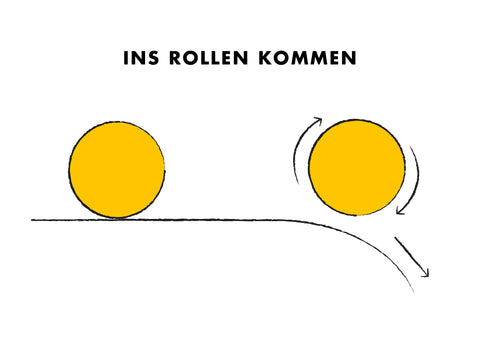
Suddenly, momentum is on your side, and the desire for more comes completely on its own. Thanks to the low demands of mini-habits, you celebrate one small success after another, enjoy building your new habit, and thus stay motivated in the long term.
More on mini-habits: Why we swear by the 6-Minute-Principle
The motto is: A simple start is pretty smart.
____________________
2. Link your habit to a place and time
Have you ever tried to motivate yourself with videos or lectures? Motivational psychologist Peter Gollwitzer found that neither videos nor lectures about the benefits of your resolutions have a measurable effect on whether words actually turn into deeds. At the same time, however, he was able to show that by writing down a so-called “implementation plan,” you can increase this probability from an average of 35% to an astonishing 91%. [4] [4] The effects of implementation plans Gollwitzer, P. M. (1999). Implementation intentions: Strong effects of simple plans. American Psychologist, 54, 493-503 This plan is nothing more than a simple sentence that links your habit with a time and place. Here are a few examples:
- Building knowledge: Instead of intending to acquire more knowledge from now on, you could write down, for example: “Today after dinner, I will read one chapter of my new book on the couch.”
- Eating healthy: Instead of “I will eat healthy," write: “I will chop up a coriander-mango salad in my kitchen after work.”
- Less stress: Instead of “I want to stay more relaxed,” write: “Every time I get angry at work, I will take two deep breaths before speaking.”
Numerous studies have shown how effective this simple approach is. [5] [5] How knowledge and motivation are connected: “The vololitional benefits of planning” in P.M. Gollowitzer & J.A. Bargh (Eds.) (1996): The psychology of action: Linking cognition and motivation to behaviour (pp. 287–312)
So save yourself the time of watching motivational videos and building castles in the air with vague resolutions. Instead, take a minute to write down specifically when and where you want to implement your plans.
The motto is: A concrete start is pretty smart.
____________________
3. Play habit Tetris
How many habits are already a fixed part of your life? Since habits are simply behaviours that you perform without thinking much about them, it is only natural that your answer to this question does not come out of the blue. Whether it is “checking your phone in the morning,” “brushing your teeth,” “tying your left shoe first and then your right shoe,” or “drinking a coffee” – the good thing about your established routines is that you can use them as a foundation for developing new habits.
Instead of, for example, developing the habit of drinking a glass of water in the morning from scratch, you can link it with your morning coffee. Behavioural researchers call this strategy “habit stacking”. [6] [6] Stacking habits: S.J. Scott (2013): Habit Stacking: 97 Small Life Changes That Take Five Minutes Or Less
We call it habit Tetris, because not all habits fit together and, just like in the game of Tetris, it really does matter how exactly you stack them. By filling out the following formula, the fun can begin – without a Game Boy: 
After I (existing habit), I will (new habit). It could look like this, for example:
- After I have had lunch, I will take a walk around the block.
- After I have meditated for five minutes, I will set my most important task for the day.
- After I have checked my emails, I will turn off all notifications for one hour.
This way, you use behaviours that have become rooted in your brain over the years as a secure anchor and increase the probability that your desired habit will also become a part of you.
The motto is: Don't reinvent the wheel, but tune up your old wheel.
____________________
4. A slip-up is not a failure
How long do you think it takes to successfully change a habit? – On average, the phase from consciously performing an activity to it becoming an automated habit takes 66 days. [7] [7] 66 days until a firm habit Lally, Phillip- pa/H.M.Van Jaarsveld, Cornelia/Potts, Henry W.W./Wardle, Jane (2009): How habits are formed: Modelling habit formation in the real world, in: European Journal of Social Psychology, Issue 40 (6) Not that long, when you consider that you can potentially benefit from it for years afterward. The easier the habit is and the more fun it gives you, the faster this process goes. If you miss a day during the building phase, it has been shown to have no long-term effect on the successful development of your new habit. [8] [8] How habits are formed: Lally, Phillip- pa/H.M.Van Jaarsveld, Cornelia/Potts, Henry W.W./Wardle, Jane (2009): How habits are formed: Modelling habit formation in the real world, in: European Journal of Social Psychology, Issue 40 (6) So occasional slip-ups will be forgiven.
A habit is a rope. We weave a thread every day and eventually we can no longer break it. – Thomas Mann
To quickly get back to weaving your rope after a slip-up, you can also perform a mini-version of your habit. Can't meditate for 10 minutes today? Then take at least 30 seconds. Don't have time to go to the gym for an hour today? Then just do one exercise or a 10-minute workout. Can't fill a whole page in your diary today? Then summarise the day in one sentence.
One today is better than ten tomorrows. – German proverb
Stay away from the all-or-nothing mentality, because it often produces no progress and, on top of that, leads to a bad conscience. Allow yourself to do a little less, so that you can get back to your usual routine afterwards. In the long run, continuity is much more important than perfection for your new habit to take hold. As Sheryl Sandberg, the co-CEO of Facebook, so beautifully put it: “Done is better than perfect". For the moment, meditating for 30 seconds might seem ridiculous to you. However, over the sum of the moments that make up your life, such small actions can make the difference between the person you are and the person you want to be.
The motto is: Less is significantly better than nothing.
____________________
5. Use your “WHY" as a driving force
When we want to change something in our lives, we often ask ourselves directly “WHAT do I want? And HOW do I get there?”. Don't like your job? So you immediately aim for a new position and write 5 applications. Feeling lonely? So you look for a partner and immediately install three dating apps. The mental focus is usually too quickly on the end result and the path that leads directly there without detours – to the better job, inner peace, the dream partner, or dream body. We cling so strongly to the WHAT and HOW that we have no time at all to calmly ask ourselves the much more important question: “WHY do I want that?”
Studies show that goals motivate us best when they are closely linked to our why – to our personal values – stand. [9] [9] Goals motivate us more when they fit our values: Levontin, L. / Bardi, A. (2019): Using Personal Values to Understand the Motivational Basis of Amity Goal Orientation, in: Frontiers in Psychology, Issue 9
Your why is your strongest driving force, your fuel. The fuller the “why tank,” the more fuel you have to integrate your habit into your life in the long term. [10] [10] Thanks to Tim Schlenzig for this beautiful analogy: 12 Habits That Will Change Your Life, p. 44-45
But it is not enough to understand the why in theory. You have to really feel it. Just because your mind knows that you will have over €3,000 in your account in a year if you save €250 a month, it will still be a long way from a firm saving habit. But if you plan a big trip every year that perfectly harmonises with your why (e.g., “broaden your horizons,” “adventure,” or “experience new cultures”), your driving force will be enough to develop the right saving habits.
With the following two questions you can check whether you have internalised your why for the next desired habit: Listen to yourself and ask: Where will this routine take me if it becomes a part of me? How much more fulfilled will my life be in one, two, or five years because of the new habit? The more you feel your why in the process, the fuller the fuel tank is for your journey to the goal.
The motto is: If your why is clear, the rest works wonderfully.
____________________
6. Link your habit with a reward
Habits generally follow three phases: [11] [11] Charles Duhigg (2012): The Power of Habit
In the first phase, we perceive a trigger that prompts our brain to “play out” the habit. In phase 2, we then perform the routine – virtually on autopilot – and are subsequently rewarded in phase 3.  For years, the sound of the alarm clock was the trigger for my habit of repeatedly using the snooze function. The reward was that I could keep sleeping, and thus a firm routine developed from this. This example also illustrates why bad habits become ingrained much faster than good ones. They reward us immediately, while the reward for good habits often comes much later:
When you eat a greasy burger with fries, your brain is immediately flooded with reward signals. If you eat healthily, however, you only feel and see the positive effects later. If you play Candy Crush instead of working on your project, your brain is immediately rewarded with a release of dopamine. If you work on your project instead, the reward comes only at the end of the month with your salary or only after a few years with your university degree.
We live in a society where a future reward is ultimately worth more than an immediate reward: Therefore, we must design our habits so that we are rewarded as quickly as possible. Whether you relax with a cup of tea after a period of intense concentration or treat yourself to a piece of chocolate after exercising – a reward can be anything that leads to a release of dopamine.
A particularly helpful and above all low-calorie reward is documenting your habits. Whether you use a habit tracker or make a colourful checkmark in your calendar – every checkmark is a quiet triumph. In addition, it can be incredibly motivating when the checkmarks pile up. This is how quiet triumphs become major achievements – and thus, in the long term, good habits. I personally have been using a habit tracker for more than four years and am convinced that some of the best routines in my life wouldn't have come about without it.
The motto is: Reward yourself for every good habit,
until rewarding yourself becomes a habit.
____________________
7. Set up your environment for success
Most of us would agree that the people we surround ourselves with also influence our own behaviour. In doing so, we too often forget that the objects in our environment also have a strong influence on us.
This includes the items on our desks, the food in our fridges, or the pictures hanging in our homes. All objects in our environment can trigger a certain behaviour. Studies show, for example, that we eat food at eye level significantly more often [12] [12] Why candy bars are always placed at the checkout counter Blog/James Clear: Why Stores Place Candy by the Checkout Counter (And Why New Habits Fail) or that smartphones distract us as soon as they are within sight or in our pocket. [13] [13] Study: Thornton, B., Faires, A., Robbins, M., & Rollins, E. Apa PsychNet (2014): The mere presence of a cell phone may be distracting: Implications for attention and task performance By storing unhealthy foods in less visible places and your smartphone in another room, it will become easier for you in the long term to eat healthier and work with greater focus.
Correspondingly, habit expert James Clear writes: “The idea that change is hard is one of the greatest myths about human behaviour. In fact, you are constantly changing effortlessly. The primary task of your brain is to adapt your behaviour to your environment. So if you consciously create a better environment, change will follow automatically.” [14] [14] Newsletter: James Clear (October 17, 2019): 3 Ideas, 2 Quotes, 1 Question Here are a few examples of how you can use your environment to effortlessly develop good habits:
- Do you want more focus and concentration? – Then clean up your desktop and close all tabs you don't absolutely need, because studies show that a cluttered screen constantly drains your cognitive energy. [15] [15] Study: Marketta, Niemelä & Perrti Saariluoma University of Jyväskylä (2003): Layout Attributes and Recall
- Do you want to eat more vegetables? – Then buy green plates. It has been shown that this automatically increases our consumption of green foods – such as broccoli, courgettes, or salad leaves – by 30%. [16] [16] The colour of plates has been proven to influence our eating behaviour: Brian Wansik, Koert van Ittersum (2012): Plate Size and Color Suggestibility: The Delboeuf Illusion’s Bias on Serving and Eating Behavior, Journal of Consumer Research, Volume 39, Issue 2, 1 August 2012, Pages 215–228
- Do you finally want to use dental floss? – Then place the dental floss right next to your toothbrush instead of in the darkest corner of the bathroom cabinet. A study involving myself showed that this makes you use dental floss 100% more often :)
- Do you want to lose weight? – Then use smaller plates, because switching from plates with a diameter of 30 cm to 25 cm automatically reduces your intake by 22%. [17] [17] The size of plates has been proven to influence our eating behaviour: Brian Wansik, Koert van Ittersum (2012): Plate Size and Color Suggestibility: The Delboeuf Illusion’s Bias on Serving and Eating Behavior, Journal of Consumer Research, Volume 39, Issue 2, 1 August 2012, Pages 215–228
Don't rely on your motivation, because as everyone knows, it fluctuates like a flag in the wind. If you want to change something in the long term, you must rely on something that is constant – and that will most likely be your environment rather than your motivation or willpower.
The motto is: Adapt your environment instead of adapting yourself.
____________________
8. Learn from the past for your future
Which approach to building positive routines promises the greatest success? To answer this question, American scientists conducted a comprehensive study with 500 participants, the results of which were only recently published. As a result, one method – so-called “habit reflection” – proved to be by far the most effective. [18] [18] Habit Reflection is the most effective of 23 tested methods for building habits: Gregory Lopez (2019): Want to form some new daily habits? We ran a massive study to explore which techniques work best. It consists of two simple steps: [19] [19] Online study on effective techniques for building habits: Doug Moore (2018): Join this study to get a leg up on forming healthy new habits.
- Step 1: Think of a positive routine you have successfully established. What strategy or tactic helped you do this?
- Step 2: Formulate a short and concrete plan for how you can use your insights to build your new habit.
Perhaps you stretch for 10 minutes every morning and have successfully established this routine because you spread out your yoga mat next to your bed before going to sleep. You can now use this success factor – namely, adapting your environment – to establish your new desired routine – namely, eating more fruit. So from now on, place an apple and a banana next to your laptop and apply a tactic that has worked for you before.
As so often in life, the most effective techniques are surprisingly simple. That is exactly why they are also often underestimated, half-heartedly carried out, or even ignored. Be smarter and don't make the same mistake. Regardless of whether you liked tip 1, 3, or 7 best – invest a few minutes in your habit reflection before you decide on a path – and thus double your chances of success.
The motto is: Use your past for your future.
____________________
9. A not so secret tip
If you are now highly motivated to turn your good intentions into real habits, I have just the right companion for you: The 6-Minute-Success Journal.
Completing this book was a resolution that I failed at for two years in a row. The methods with which the project was then completed ended up in this very book. It is also intended to help you reliably achieve your personal goals – step by step, habit by habit.
As I write this sentence, I look back on one of the most productive years of my life – and that despite having reduced my workload by about 30%. In the 6-Minute-Success Journal, you'll not only find the explanation of the techniques that helped me get to this point, but you will also receive a practical section in which you can easily apply them in a few minutes a day and internalise them in the long term.
If you intend to renew yourself, do it every day. – Confucius
If you believe the wise words of Confucius, it is practically New Year's Day every day and every day is a good day to start. So write down right now a habit you would like to develop for 2022 – or even better, for the new decade.
The motto is: Better now than never.
____________________
If you want to know how to overcome procrastination and finally defeat your inner resistance, feel free to read here further.
____________________
This post is by Dominik Spenst, founder of the 6-Minuten-Verlag, author of the 6-Minute-Diary and the 6-Minute-Success Journal. When he's not writing 6-Minute-Journals, he browses non-fiction books or praises his employees so inconspicuously that they don't notice.
Sources:
[1] Almost everyone fails to implement their goals Anthony Robbins (2012): Change, Robbins Research International
[2] Only 5% of our decisions are conscious: Zaltmann, Gerald (2003): How Customers Think: Essential Insights into the Mind of the Market
[3] Mini-habits as a recipe for success Stephen Guise (2018): Much Better Than Good Intentions: How to Experience Maxi-Success with Mini-Habits
[4] The effects of implementation plans Gollwitzer, P. M. (1999). Implementation intentions: Strong effects of simple plans. American Psychologist, 54, 493-503
[5] How cognition and motivation are connected: “The vololitional benefits of planning" in P.M. Gollowitzer & J.A. Bargh (Eds.) (1996): The psychology of action: Linking cognition and motivation to behaviour (pp. 287–312)
[6] Habit stacking: S.J. Scott (2013): Habit Stacking: 97 Small Life Changes That Take Five Minutes Or Less
[7] 66 days to a firm habit Lally, Phillip- pa/H.M.Van Jaarsveld, Cornelia/Potts, Henry W.W./Wardle, Jane (2009): How habits are formed: Modelling habit formation in the real world, in: European Journal of Social Psychology, Issue 40 (6)
[8] How habits are formed: Lally, Phillip- pa/H.M.Van Jaarsveld, Cornelia/Potts, Henry W.W./Wardle, Jane (2009): How habits are formed: Modelling habit formation in the real world, in: European Journal of Social Psychology, Issue 40 (6)
[9] Goals motivate us more when they fit our values: Levontin, L. / Bardi, A. (2019): Using Personal Values to Understand the Motivational Basis of Amity Goal Orientation, in: Frontiers in Psychology, Issue 9
[10] Tim Schlenzig: 12 Habits That Will Change Your Life, pp. 44-45
[11] Charles Duhigg (2012): The Power of Habit
[12] Why candy bars are always placed at the checkout counter Blog/James Clear: Why Stores Place Candy by the Checkout Counter (And Why New Habits Fail)
[14] Newsletter: James Clear (October 17, 2019): 3 Ideas, 2 Quotes, 1 Question
[15] Study: Marketta, Niemelä & Perrti Saariluoma University of Jyväskylä (2003): Layout Attributes and Recall
[16] The colour of plates has been proven to influence our eating behaviour: Brian Wansik, Koert van Ittersum (2012): Plate Size and Color Suggestibility: The Delboeuf Illusion’s Bias on Serving and Eating Behavior, Journal of Consumer Research, Volume 39, Issue 2, 1 August 2012, Pages 215–228
[17] Plate size has a proven effect on our eating behaviour: Brian Wansik, Koert van Ittersum (2012): Plate Size and Color Suggestibility: The Delboeuf Illusion’s Bias on Serving and Eating Behavior, Journal of Consumer Research, Volume 39, Issue 2, 1 August 2012, Pages 215–228
[18] Reflecting on habits is the most effective of 23 tested methods for building habits: Gregory Lopez (2019): Want to form some new daily habits? We ran a massive study to explore which techniques work best
[19] Online study on effective techniques for building habits: Doug Moore (2018): Join this study to get a leg up on forming healthy new habits.
19 comments
Hallo Dominik, du bezeichnest dich selbst als Gewohnheitsexperte und schreibst auch im 6 Minuten-Tagebuch viel Interessantes dazu, aber was sind deine Gewohnheiten? Vielleicht kannst du dazu mal einen Blog schreiben oder dazu, was deiner Meinung nach die besten Gewohnheiten sind.
Das wäre bestimmt auch für andere außer mir sehr spannend^^
Danke für deinen 6 Minuten-Newsletter und das Tagebuch. Beides ohne Frage kleine Lebensverbesserer für mich, schon seit ziemlich langer Zeit. Weiterhin alles Gute dir, Sergej
Hey Dominik,
danke für diesen unterhaltsamen und informativen Artkel! Ich habe mir sehr viele Notizen gemacht. Ich bin über dein 6-Minuten-Erfolgsjournal auf diesen Blog gestoßen und mache aktuell sehr überraschend große Fortschritte durch dein Buch. Habe echt schon viel probiert, aber dieses Journal ist echt das erste, wo es mir leicht fällt, täglich auszufüllen. Darüber bin ich echt so froh, weil mir einfach immer die Beständigkeit fehlte im Leben. Und jetzt habe ich das Gefühl mit dem Journal baue ich genau diese Beständigkeit auf!
Mit besten Grüße,
Patrick
Unfassbar guter Artikel, weil er einfach so voll mit praktischen, ganz klar erklärten Tipps und super Beispielen ist! Danke lieber Dominik!
PS: Danke für dein 6-Minuten-Erfolgsjournal, das mein Leben zum Positiven verändert hat (und das ich sogar noch besser finde als das 6-Minuten-Tagebuch
Hallo, vielen Dank für deinen Beitrag.
Trotz der Tatsache, dass diese Methoden und Strategien so bekannt sind, schaffen nur die wenigsten Menschen diese umzusetzen, dies ist eine ziemlich traurige Tatsache. Daher möchte ich dies nun ändern und aus wünschen Taten machen. Kleiner Tipp, auch wenn der Beitrag super ist… würde ich den Beitrag immer mal wieder updaten… wenn ich als Leserin lese 2020 anstelle von 2022 dann kommt es mir so vor als sei der Beitrag für die Menschen vor zwei Jahren geschrieben worden… wer auch immer sich die Mühe macht heute diesen Beitrag zu lesen… der möchte sich im Jetzt und Heute angesprochen fühlen und nicht am Ende des Textes merken, Ubs! Dieser Text wurde vor 2 Jahren hier veröffentlicht und ist gar nicht mehr so up to Date. Das verringert die Qualität der doch Inhalte die ich bis ich das Jahr gelesen habe, gut und Sinnvoll erschienen. Trotzdem vielen lieben Dank für deine Arbeit und ich versuche trotzdem mein Glück mit dem 6-Minuten Erfolgsjournal.
Liebe Grüße und viel Erfolg darin diesen Wert diesen Beitrags um 1 % zu steigern indem das Jahr [Error2020] (ich glaube, es war im letzten Absatz) auf 2022 zu aktualisieren.
Durch diese kleine Veränderung könnte dieser Beitrag ein kleines Upgrade erhalten. ;-P
Lg, Diana
Hi Dominik!
Ich nutze die Coronazeit um im wahrsten SINN des Wortes „positiv“ mein Leben zu verändern! Neben dem GameChanger mit Jörg Löhr, habe ich viele Bücher zum Thema gelesen und gehört … von meiner lieben Frau habe ich zu Weihnachten dein 6 Minuten Erfolgs-Journal bekommen! Kompliment! Es ist eines der beREICHerndsten die nicht nur im Kopf, sondern auch im Herz angekommen ist! Bin grad dabei meine neuen Gewohnheiten zu verinnerlichen und mein WARUM zu stärken und zu leben!
Mein MOTTO: Bunt oder Grau? Unser Leben ist uns vorgezeichnet – ausmalen können wir es uns selbst!
In diesem Sinne – Dominik, danke für die neuen Farben! Dein Berni
Liebs! Vielen Dank für diesen Blog Beitrag, er hat mir so einiges in Erinnerung gerufen und auch neue Dinge ins Rollen gebracht. Habits sind wirklich so wichtig und aus meinem Leben nicht mehr wegzudenken. Am Liebsten mag ich “Nutze dein Warum als Antriebskraft.” Immer wenn ich ins Wackeln komme stelle ich mir genau diese Frage: Was ist mein Warum?
Übrigens, kleiner Tipp: wenn dich dein Warum nicht dazu motiviert dranzubleiben, ist es vielleicht nicht stark genug. Mach es stark und kopple es an deine Bedürfnisse. Das hat mir total geholfen.
Also danke für eure Beträge, sind wie immer super zu lesen und leicht zu verinnerlichen. Danke.
Marry
Hey Dominik,
dein Erfolgsjournal hat mir im letzten halben Jahr unfassbar geholfen! Ich würde sogar sagen es war das erfolgreichste Jahr meines Lebens und auch wenn das Journal dafür nur ein Hilfsmittel war und es mir nur jeden Tag die Türen öffnet, durch die ich selbst gehen muss, hötte ich das ohne nicht geschafft, und ich habe vorher echt vieles probiert, andere Apps, Produktivitätsplaner etc. Danke für die Tiefe bei deiner Arbeit, die man auch bei diesem Blog gespürt hat, danke für das Herz und die Recherche, die du da reinsteckst!
Und das sage ich dir von Dominic zu Dominik :)
Klasse Dominik!
Ich bin ein Fan von deiner einfachen, verständlichen und nachvollziehbaren Schreibweise. Deine gewählten Worte sind passend, leicht verständlich. Es macht echt Spaß deinen Artikel zu lesen.
Ich habe mir all deine Tipps aufgeschrieben und fasse Sie nun zusammen.
Danke, dass es dich gibt. ☺️
Ich habe das 4. 6-Minuten-Tagebuch begonnen und schreibe seit einiger Zeit täglich das 6-Minuten-Journal. Ich bin sehr dankbar für die „Theorieteile“ und lese gerne die Achtsamen 3.
Ich hatte 2 kräftige Burnouts. Aus den Tiefen wieder hochzuklettern ist sehr schwer. Am Anfang war das Tagebuch sowas wie meine Krücken. Nach dem ersten Buch wusste ich, ich brauche immer noch Krücken. Inzwischen sind die beiden Bücher sowas wie Walkingstöcke, und ich habe viel geschafft. Das Leben ist schön. Dankeschön
Hallo Dominik, ich habe das Erfolgsjournal schon 2019 einmal begonnen. Ich habe es nicht geschafft es wirklich weiter zu führen. Ich bin natürlich in mein altes Chema zurückgefallen. Jetzt werde ich nochmal von vorn beginnen. Ich habe Urlaub und beschäftige mich intensiv mit dem was ich verändern möchte, was schon Routine ist, wo ich etwas ändern sollte und wie ich es angehen kann. Ich weiß das Buch wird mir helfen und diesmal schaffe ich es, mein Leben positiv in den Griff zubekommen. Ich habe gute Ansätze entdeckt, ich lese sehr intensiv, alle Tipps und schaue was ich umsetzen kann. Danke für diese tolle Möglichkeit.
Ja, stimmt
Viel gelesen zum Thema, bisher bester Text zum Gewohnheiten etablieren. Punkt.
Thx und Grüße, Jan
Vielen herzlichen Dank für die tollen Artikel, die ihr jede Woche veröffentlicht.
Zu den Gewohnheiten: ich habe festgestellt, dass es für mich einfacher ist, eine Gewohnheit nach der anderen in mein Leben aufzunehmen. Oft will man ja ALLES zur gleichen Zeit; Fitness, gesünder essen, mehr Me-Time, mehr von diesem, weniger von jenem, etc.
Ich habe mir eine Liste gemacht und pro Monat nur eine neue Gewohnheit definiert. zB Oktober 10 Minuten früher aufstehen. November Morgenmeditation. Dezember 5-Franken-Stücke sammeln, etc.. Die neue Gewohnheit mach ich dann konsequent jeden Tag pro Monat und im nächsten Monat kommt eine neue dazu. So schafft man es im Handumdrehen pro Jahr 12 neue Gewohnheiten einzuspielen.Hallo Dominik,
erst einmal vielen Dank für die tollen Ideen zur Etablierung von neuen positiven Gewohnheiten in meinem Leben. Ich wollte mich noch einmal ganz herzlich für das Veröffentlichen des 6 Minuten Tagebuchs bedanken, da ich schon mehrere Bücher im Bereich der Persönlichkeitsentwicklung gelesen und an mir selbst getestet hatte und keins davon die Infos so kompakt und auch verständlich verpackt hatte, wie Ihr es geschafft habt. Respekt. Außerdem bietet Ihr zusätzlich zu den Büchern auch noch den kostenlosen Newsletter an, um Menschen zu einem erfüllteren Leben zu verhelfen. Einfach Klasse. Weil ich von eurer Motivation überzeugt bin, haben schon viele besondere Menschen aus meinem Freundeskreis das 6 Minuten Tagebuch als Geschenk erhalten und ich bin mir sicher, dass daraus etwas positives für Ihr Leben rausspringt :-)
Als Verbesserung, würde ich mir wünschen, dass das neue Buch auch direkt über euch bezogen werden kann und ich nicht aus bequemlichkeit mich daran beteilige, dass Jeff Bezos (Amazon) noch reicher und einflussreicher wird…. PS: Habs jetzt über meinen Buchhändler vor Ort bestellen. Euch alles gute für das neue Jahr ;-)
Herzlichen Dank Dominik für diese wertvollen Anregungen. Langfristig etwas zur Gewohnheit machen mit einfachen, aber effektiven Methoden. Das möchte ich gerne für mich nutzen.
Sehr gerne möchte ich mir einmal das 6-Minuten-Erfolgsjournal ansehen, habe noch keine konkrete Vorstellung von diesem Werk. Gibt es im Netz eine Möglichkeit einmal ein paar Seiten als Blick ins Buch zu sehen?
Ein gutes 2020 wünscht
Uschi
Hui das waren aber viele Informationen. Danke für diese tollen Tipps, die konnte ich schon beim Lesen auf meinen eigenen Alltag übertragen! Kommt nicht allzu oft vor bei so „Tipp-Blogbeiträgen", da oftmals auch viel heiße Luft dabei ist… die Quellen helfen! Danke für die Mühe :-)
Hallo Dominik, der Artkel gefällt mir sehr gut! Schön strukturiert und wertvoller Inhalt.
Ich glaube mit dem Thema Gewohnheiten hat so gut wie jeder Mensch zu tun. Nur so gut wie kein Mensch hat Lust sich so richtig damit zu beschäftigen weil die meisten Gewohnheiten schlecht und anstrengend zu ändern sind.
Mir ist aufgefallen, dass “Gewohnheiten-Tetris” in vielerlei Hinsicht schon zu meinem Leben gehört. Dein Beitrag hat mir noch mal den Anstoß gegeben es doch noch mal mit der Meditation zu probieren. Ich trinke meinen Kaffee sowieso etwas kälter und werde sie einfach an den Kaffee anhängen. Dann setze ich mich nach dem Kaffee auf das Meditationskissen, das schon bereit liegt und vor 2 jahren gekauft wurde.
Der Kaffee ist meine Belophnung und ich habe Tipp 2, 6 und 7 vereint. Wie du siehst, konnte ich mir sehr viele Tipps absehen.
Lieben Gruß,
Maria
Ich habe erst kürzlich das Buch von Charles Duhigg zu Gewohnheiten gelesen und fand es sehr spannend. Gestört hat mich nur, dass man 20 verschiedene Geschichten liest, die ein und dasselbe aussagen, aber die Frage wie man Gewohnheiten denn im eigenen Leben nutzen kann bleibt unbeantwortet.
Also war ich vor Weihnachten im Buchhandel und habe nach einem Praxisratgeber für gefragt und empfohlen wurde mir wieder dasselbe Buch von Charles Duhigg. Da kommt mir dieser Beitrag wie gerufen, ich mag den wissenschaftlichen Stil gepaart mit alltagsnahen Beispielen!
Auch um 7 Uhr morgens auf dem Weg zur Arbeit super verständlich und dieser Kommentar kommt frisch aus der Münchener U-Bahn :) Ich werde berichten, wie mir die Tipps geholfen haben…
Leave a comment
Discover the 6-Minute-Journals


👉 Everything you can be is already within you.

Dominik Spenst, Author & Founder of 6-Minuten-Verlag